
Trump Anticipated to Engage with Crypto Industry Leaders in Landmark White House Meeting
President Donald Trump is expected to participate in a high-profile White House meeting with chief executives from the cryptocurrency, prediction market, and artificial intelligence sectors, signaling a potential shift in the administration's engagement with these rapidly evolving industries. The gathering precedes the inaugural session of a new Commodity Futures Trading Commission (CFTC) advisory committee, tasked with shaping the future of innovation and regulation.
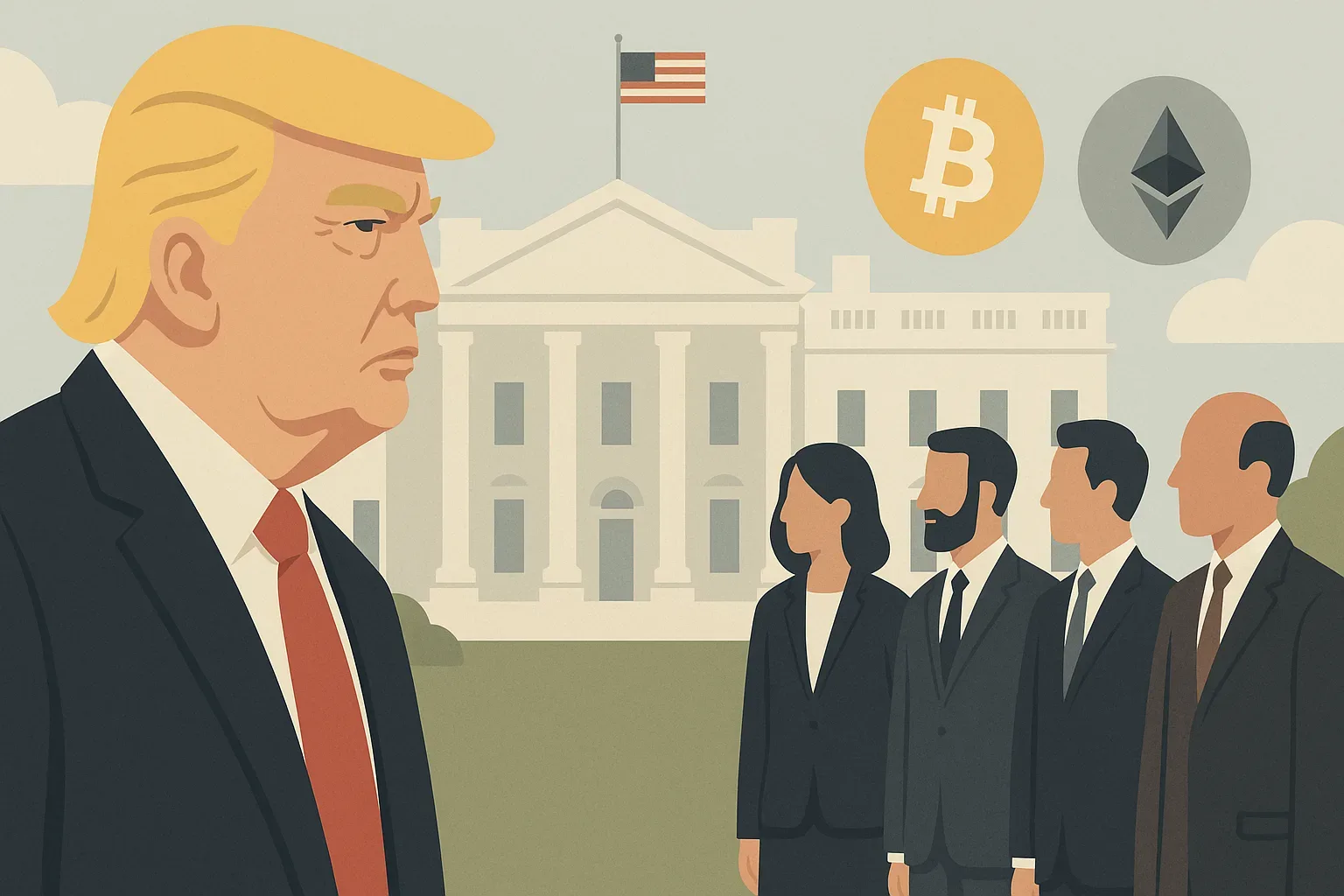
A significant meeting approaches for the U.S. digital asset space, as President Donald Trump is reportedly slated to attend a White House gathering with leading figures from the cryptocurrency, prediction market, and artificial intelligence industries. This high-level engagement underscores a potentially renewed focus from the highest echelons of government on these developing sectors that are significantly changing modern finance and technology.
The primary objective of this assembly, expected at the Eisenhower Executive Office Building adjacent to the White House, is to initiate an important policy dialogue. This dialogue aims to address the leading areas for U.S. innovation, setting a strategic groundwork for future regulatory and developmental pathways. For an industry often dealing with varied regulations and a desire for clearer guidance, a direct conversation with the President and his administration represents a significant moment. The meeting serves as a preliminary session to the first official gathering of the newly established Innovation Advisory Committee under the Commodity Futures Trading Commission (CFTC), highlighting a coordinated effort to bring these active industries into mainstream policy discussions.
Among those anticipated to participate are the chief executives of several prominent crypto companies, including Coinbase, Ripple, Gemini, and Robinhood. These established industry figures, along with leaders from innovative prediction market platforms such like Polymarket and Kalshi, are members of the aforementioned CFTC Innovation Advisory Committee. Their presence at the White House meeting before their committee's inaugural session signals the administration's intent to hear directly from those leading digital asset and emerging tech development. The roster for the White House meeting is also expected to feature important government officials, including CFTC Chairman Mike Selig and other advisors. Sources also indicate the potential attendance of Treasury Secretary Scott Bessent and Secretary of Commerce Howard Lutnick, whose participation would increase the discussions' significance, bringing a wide governmental perspective. This diverse representation of both industry pioneers and high-ranking government officials points to a concerted effort to improve communication that has historically marked the relationship between Silicon Valley innovation and Washington D.C. policymaking.
The formation of the CFTC's new Innovation Advisory Committee itself marks a significant step towards formalizing dialogue and policy formulation for these advanced sectors. This committee includes not only digital asset innovators but also leaders from more traditional financial institutions. Executives from the CME Group, Nasdaq, and Intercontinental Exchange, alongside Frank La Salle, the head of the DTCC, are also listed as members. This interdisciplinary composition reflects a recognition by regulators of the increasingly intertwined nature of conventional finance and the developing digital economy. The committee's inaugural meeting, slated for the day after the White House gathering, will examine a detailed innovation agenda. The opening session is titled, "Crypto’s Regulatory Evolution: From Uncertainty to Clarity," which reflects the industry's longstanding request for a definitive and coherent regulatory framework. A primary topic for discussion within this session is reportedly "the remaining challenges to a lasting federal market structure." This suggests the CFTC intends to identify and address systemic issues that could hinder the growth and stability of digital asset markets within the federal purview. The committee's work is anticipated to advise the CFTC on how best to regulate these complex and developing markets, balancing the need for innovation with consumer protection and financial stability.
The timing of these high-level meetings is particularly pertinent given the ongoing legislative debates surrounding digital assets in the United States. The White House and President Trump’s administration have been deeply involved in what sources describe as a "contentious debate" concerning the advancement of the Digital Asset Market Clarity Act through its final stages in the U.S. Senate. This proposed legislation is important for the crypto industry, as it aims to provide much-needed regulatory clarity regarding the classification and oversight of various digital assets. The successful progression and eventual enactment of such a bill could significantly shape the future operational environment for crypto firms in the country. However, the path forward for this legislation, and for broader administration policy on crypto, may be intricately linked to the President's willingness to embrace stricter ethics restrictions that would govern his personal involvement in the crypto industry. This increases the discussions' complexity, suggesting that policy decisions might not only hinge on economic or technological merits but also on considerations of transparency and public trust. The interplay between legislative intent, executive engagement, and ethical considerations highlights the multiple challenges involved in developing complete regulatory frameworks for a new asset class. For industry stakeholders, the hope is that direct engagement with the President could help resolve legislative impasses and create a more supportive regulatory environment.
The anticipated presence of President Trump at such a meeting, engaging directly with leaders from the digital asset space, could mark a significant turning point for the cryptocurrency industry in the United States. Historically, government engagement with crypto has often involved caution, enforcement actions, or a more hands-off approach, with specific agencies like the SEC and CFTC taking the lead. Direct presidential involvement brings the conversation to the highest level, signaling that digital assets are now firmly on the national policy agenda. This could potentially lead to a more unified and complete federal strategy for crypto regulation, moving away from the fragmented and often contradictory approaches seen across various agencies. For an industry that has consistently advocated for a clear, predictable regulatory environment to support innovation and investment, this meeting could offer significant promise. It provides a unique opportunity for crypto CEOs to articulate their challenges, propose solutions, and educate policymakers on the unique aspects and potential benefits of blockchain technology, decentralized finance, and digital currencies. The industry has long argued that regulatory uncertainty pushes innovation offshore, impeding the U.S.'s competitiveness in a global digital economy. A clear policy directive from the White House, even if just in principle, could encourage domestic growth and investment.
The discussion around "Crypto’s Regulatory Evolution: From Uncertainty to Clarity" in the CFTC committee's agenda directly reflects the industry's primary concern. The absence of a "lasting federal market structure" has left many firms uncertain, unsure of which rules apply, or whether their products might be retroactively deemed illegal. This has stifled innovation, deterred institutional investment, and created a complicated legal environment. The involvement of traditional financial giants like CME Group and Nasdaq in the advisory committee underscores a broader trend: the convergence of traditional finance (TradFi) and decentralized finance (DeFi). As more established institutions explore blockchain technology and digital assets, the need for clear regulatory guardrails that protect investors without stifling technological progress becomes even more pronounced. The advisory committee, with its diverse membership, is well-suited to offer insights that connect these two worlds, advocating for policies that enable responsible innovation within a secure financial ecosystem. The participation of DTCC's head, Frank La Salle, also emphasizes this convergence, as the DTCC is important in post-trade infrastructure for traditional securities.
However, despite the optimism, challenges remain. The source article notes that White House spokespeople did not immediately respond to requests for comment on the plans, indicating that while expectations are high within industry circles, the official position might still be cautious or evolving. This silence often precedes significant policy announcements or signals internal deliberations not yet ready for public consumption. Additionally, regulating not just cryptocurrencies, but also prediction markets and artificial intelligence, presents significant complexities. Each sector presents its own set of regulatory dilemmas, from consumer protection in volatile crypto markets to ethical considerations in AI development, and the distinct challenges of speculative prediction markets. Crafting a cohesive policy that addresses these disparate yet interconnected fields requires a detailed understanding and a collaborative approach. The "contentious debate" around the Digital Asset Market Clarity Act underscores the political friction involved in establishing such frameworks. Different factions within government may hold varying views on the appropriate level of regulation, the classification of digital assets, and the balance between innovation and oversight. Overcoming these political hurdles will be essential for any meaningful progress.
The reference to President Trump's "willingness to accept tighter ethics restrictions governing his personal involvement in the crypto industry" increases scrutiny and potential political complication. In an era where public trust in institutions is critical, particularly concerning financial markets, transparency and clear ethical guidelines for high-ranking officials are essential. Any perception of personal gain influencing policy decisions could undermine the legitimacy of new regulations and cast a shadow over the administration's engagement with the crypto sector. This factor highlights the complex set of considerations, political, ethical, and economic, that shape policy decisions at the highest levels of government.
The anticipated White House meeting, spearheaded by President Trump and involving a wide range of industry leaders and government officials, marks an important moment for digital asset policy in the United States. It offers a unique opportunity for direct dialogue and could establish the basis for a more coherent and supportive regulatory environment. The subsequent inaugural session of the CFTC's Innovation Advisory Committee also solidifies this intent, promising detailed discussions on achieving clarity in crypto regulation. While the path forward is fraught with legislative challenges and ethical considerations, bringing these discussions to the highest levels of government signifies a growing recognition of the profound impact and potential of the digital economy. For GlobalCryptoWallets.com readers, this event represents a significant development that could influence investment landscapes, innovation trajectories, and the future of digital finance for years to come. The industry will be watching closely to see if these high-level discussions translate into concrete actions that lead to an era of clarity and sustained growth for digital assets in the U.S.
Source: CoinDesk — https://www.coindesk.com/policy/2026/08/14/trump-expected-to-attend-white-house-meeting-with-crypto-ceos-sources-say
Topics in this article
- white-house
- crypto-regulation
- innovation
- cftc
- donald-trump
GlobalCryptoWallets.com publishes news, reviews, and educational information only. Nothing on this website is financial, investment, trading, legal, or tax advice. Cryptocurrency involves substantial risk, and readers should conduct independent research and consult a qualified professional before making decisions.