GuidesEvergreen guide
How to Send Crypto Securely
How to Send Crypto Securely: practical advice for readers from GlobalCryptoWallets.com.
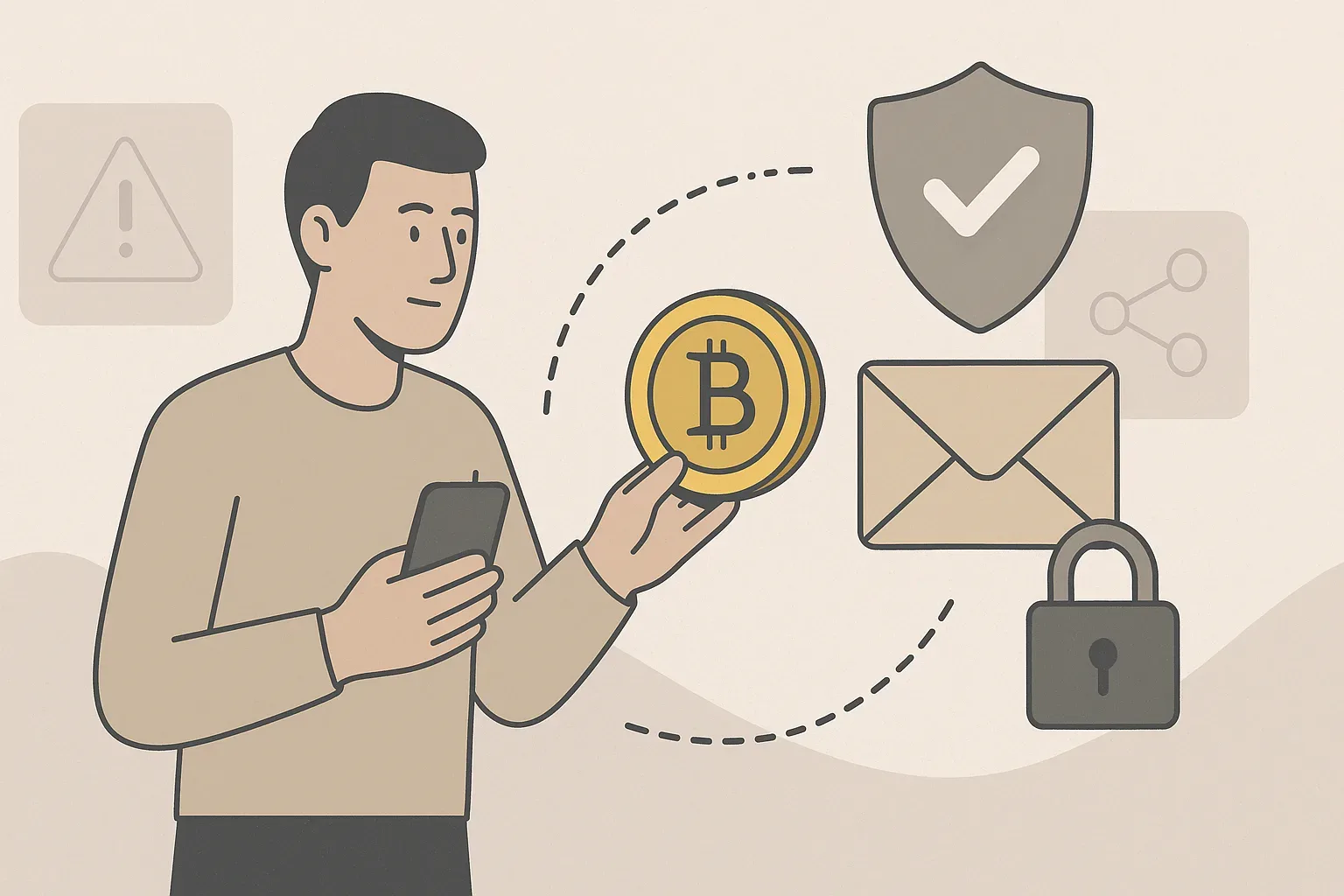
Sending cryptocurrency, unlike traditional banking transfers, is largely irreversible. A single mistake, a moment of haste, or a lapse in security can lead to permanent loss of funds, with no bank or intermediary to reverse the transaction. This document details a step by step method for securely sending cryptocurrency. It focuses on essential security protocols and practices to protect your assets from common errors, network mismatches, and sophisticated threats. Understanding and meticulously applying these principles is essential for anyone participating in the crypto economy.
Understanding the Core Components: Wallets, Networks, and Addresses
Before initiating any transfer, understand the fundamental components involved. These include your crypto wallet, the blockchain network, and the recipient's address.
A crypto wallet is a tool that allows you to store and manage your digital assets. It does not actually hold your crypto, but rather the private keys that prove ownership of your funds on the blockchain. Wallets come in various forms, including software wallets (hot wallets like MetaMask or exchange wallets), and hardware wallets (cold wallets like Ledger or Trezor).
Blockchain networks are the underlying infrastructure on which cryptocurrencies operate. Examples include Bitcoin, Ethereum, Solana, Binance Smart Chain (BSC), Polygon, and countless others. Each network has its own rules, transaction speeds, and fee structures.
A crypto address is a unique identifier on a blockchain network, similar to a bank account number, where funds are sent. These addresses are typically a string of alphanumeric characters. Different networks have distinct address formats, though some, like Ethereum and many EVM-compatible chains, share similar formats. Accurately knowing and verifying the recipient's address, and confirming it belongs to the correct network, is essential.
The Pre-Flight Checklist: Essential Security Steps Before Sending
Before you even think about clicking the send button, a thorough security checklist can mitigate most common risks. This is how you can accurately verify a recipient's crypto address and ensure you are using the correct network.
- Secure Your Device: Ensure your device for the transaction is free from malware, viruses, or any other malicious software. Run up-to-date antivirus and anti-malware scans. Keep your operating system and browser updated to the latest versions. 2. Verify Wallet Integrity: If using a software wallet, ensure it is the official application or browser extension downloaded from the developer's verified website. For hardware wallets, confirm the device firmware is updated and that the device itself has not been tampered with. 3. Do not rely solely on an address sent via email, instant message, or social media, as these can be compromised. Call the recipient, or use an encrypted messaging app to confirm the address character by character. If sending to an exchange, verify the deposit address from the exchange's official website, logged into your account. 4. Confirm Network Compatibility: This step is important. Confirm with the recipient which specific network the funds should be sent on. For example, if sending USDT, confirm if it is USDT on Ethereum (ERC-20), Solana, BSC (BEP-20), or Polygon. 5. Check for Clipboard Hijacking: Malware exists that can silently alter copied cryptocurrency addresses in your clipboard. Only then should you paste it into your wallet's send field.
step by step: How to Securely Send Your Crypto
Once your pre-flight checks are complete, you can proceed with the transaction, following these fundamental steps involved in securely sending cryptocurrency from a wallet or exchange.
- Access Your Wallet or Exchange: Log into your cryptocurrency exchange account or unlock your self-custody wallet (e.g., MetaMask, Ledger Live). Ensure you are using the official website or application, not a phishing site. 2. Initiate the Send Transaction: Navigate to the send or withdraw section for the specific cryptocurrency you wish to transfer. Select the correct asset. 3. Enter the Recipient's Address: Paste the thoroughly verified recipient address into the designated field. 4. From the dropdown or options presented, carefully select the exact blockchain network agreed upon with the recipient. For instance, if sending ETH on the Ethereum mainnet, choose 'Ethereum (ERC-20)'. If sending MATIC on Polygon, choose 'Polygon Network'. A mismatch here will lead to lost funds. 5. Enter the Amount: Input the exact amount of cryptocurrency you wish to send. 6. Review Transaction Fees: Your wallet or exchange will typically display the estimated network transaction fee (gas fee). Some platforms allow you to adjust the fee, impacting transaction speed. 7. Confirm Transaction Details: Review all details one last time: recipient address, amount, cryptocurrency type, and selected network. 8. Authorize the Transaction: Depending on your wallet or exchange, you will be prompted to authorize the transaction. This might involve entering a password, confirming on a hardware wallet, or using two-factor authentication (2FA). 9. Monitor the Transaction: After sending, most wallets and exchanges provide a transaction ID (TxID) or a link to a blockchain explorer. Use this to monitor the transaction's status and confirm its successful receipt by the recipient.
Common Pitfalls and How to Avoid Them During Transfer
Recognizing them helps in mitigation.
- Mitigation: Meticulous verification of the address with the recipient through multiple channels, clipboard hijacking checks, and small test transactions for large sums. 2. Mitigation: Explicit confirmation of the network with the recipient, careful selection from wallet options, and understanding that networks are not interchangeable (e.g., BTC to an ETH address is lost). A small test transaction effectively addresses this. 3. Phishing and Malicious Websites: Scammers create fake exchange or wallet sites to steal your credentials or funds. Mitigation: Always use bookmarked official URLs. Never click suspicious links from emails, social media, or search ads. 4. Clipboard Hijacking Malware: This malware silently swaps addresses. Mitigation: Always verify the pasted address character by character against the original. 5. Never conduct a transaction under pressure or when distracted. 6. Ignoring Transaction Fees: While not a security risk in itself, misjudging fees can lead to failed or stuck transactions. Mitigation: Understand the fee structure of the network and confirm the fee before sending. Ensure you have enough native currency for gas (e.g., ETH for ERC-20 tokens). 7. Providing Seed Phrases/Private Keys: No legitimate wallet or exchange will ever ask for your seed phrase or private keys. Any request for these is a scam.
Advanced Security Measures for Enhanced Protection
For those looking to bolster their security posture beyond the basics, several advanced measures can provide enhanced protection. These additional security tools and practices can safeguard your crypto during transfers.
- Hardware Wallets: For significant amounts of crypto, a hardware wallet (cold storage) is highly recommended. These devices keep your private keys offline, making them immune to online threats. Transactions must be physically confirmed on the device, adding an important layer of security. Our guides on https://globalcryptowallets.com/guides/transfer-crypto-to-a-hardware-wallet and https://globalcryptowallets.com/guides/how-to-set-up-a-cold-storage-wallet provide detailed instructions. 2. Multisignature (Multisig) Wallets: These wallets require multiple approvals (signatures) from different private keys to authorize a transaction. This setup is ideal for shared funds, organizational treasuries, or individuals who want extra security by requiring, for example, approval from two of three separate hardware wallets. 3. Address Whitelisting: Many exchanges and some wallets offer an address whitelisting feature. This allows you to pre-approve specific withdrawal addresses. Once an address is whitelisted, you can only send funds to that address, significantly reducing the risk of sending to an unauthorized or incorrect address. 4. Dedicated Devices: Consider using a dedicated, air-gapped (offline) or minimally connected computer solely for managing your crypto. This device should have minimal software installed, no web browsing, and strict security protocols to reduce its attack surface. 5. Small Test Transactions: This is one of the most powerful and simple advanced security practices. Before sending a large sum, send a very small, negligible amount (e.g., $1-5 equivalent) to the recipient's address and network. Wait for this test transaction to confirm on the blockchain and for the recipient to acknowledge receipt. Only after successful confirmation of the test transaction should you send the full amount. This absorbs typing errors, wrong networks, and misconfigured settings, and it should be employed whenever you are sending to a new address, a new network, or a significant sum where the loss would be detrimental. 6. Regular Security Audits: Periodically review your wallet permissions, connected DApps, and exchange security settings. Revoke unnecessary smart contract approvals.
What Happens If You Send Crypto to the Wrong Address (And How to Prevent It)
The irreversible nature of blockchain transactions means that sending crypto to the wrong address is usually catastrophic. Unlike traditional banking, there is no central authority to reverse or recall funds. Here's a breakdown of what happens and, more importantly, how to prevent it.
Scenarios of sending to the wrong address:
- Sending to a non-existent or invalid address: If the address format is entirely wrong or doesn't correspond to any active wallet on the network, the funds might simply be unspendable, effectively lost forever in the void of the blockchain. * Sending to an address on an incompatible network: This occurs frequently. For instance, sending Ethereum (ERC-20) to a Bitcoin address, or sending BNB (BEP-20) to an Ethereum address. In most cases, these funds are irrecoverably lost because the private key for the receiving address on the *intended* network simply doesn't exist or isn't compatible with the *sent* network. Some advanced users with technical expertise might be able to recover funds if the private key of the 'wrong' address can be imported into a wallet that supports the 'correct' chain, but this is rare and complex. * Sending to a valid but incorrect address: If you accidentally send funds to someone else's legitimate wallet address, those funds are now under their control. Without their cooperation, which is rarely granted, recovery is impossible. There is no 'chargeback' mechanism.
Preventing these scenarios is essential:
- Double-Check Everything: Before clicking send, review every detail: asset type, amount, recipient address, and, importantly, the network. Then, review it again. A moment of diligence can save you from irreversible loss. * Use Test Transactions: This is your strongest defense against sending to the wrong address or network, especially for large transfers or new recipients. Send a minuscule amount first and verify its safe arrival. * Communicate Securely: Always verify addresses directly with the recipient through a separate, confirmed communication channel, avoiding reliance on potentially compromised emails or messages. * Understand Network Specifics: Take the time to learn the differences between blockchain networks and their address formats. Never assume compatibility. * Leverage Whitelisting: Use address whitelisting on exchanges to restrict where you can send funds, adding an extra layer of protection. * Employ Hardware Wallets: These devices require physical confirmation of the address on the device screen, making it harder for malware to trick you.
Summary of Secure Crypto Transactions
Secure crypto transactions require ongoing education, vigilance, and meticulous execution. The decentralized, irreversible nature of blockchain means that the responsibility for asset security largely rests with the user. By understanding the core components of wallets, networks, and addresses, diligently performing pre-flight security checks, and following a step by step secure transfer process, you equip yourself against the most common pitfalls.
Adopting advanced security measures such as hardware wallets, multisig setups, address whitelisting, and the important practice of small test transactions enhances your protection. Recognizing the catastrophic consequences of sending crypto to the wrong address, and actively implementing preventative measures, reinforces a robust security posture. In the cryptocurrency sector, security is not a one-time setup but a continuous habit. Cultivate diligence, verify everything, and stay informed to safeguard your digital assets effectively.
Topics in this article
- crypto-security
- crypto-transfers
- blockchain-safety
- wallet-management
- digital-asset-protection
- secure-transactions
GlobalCryptoWallets.com publishes news, reviews, and educational information only. Nothing on this website is financial, investment, trading, legal, or tax advice. Cryptocurrency involves substantial risk, and readers should conduct independent research and consult a qualified professional before making decisions.