
Scams & SafetyEvergreen guide
Warning Signs of a Crypto Pig Butchering Scam
Warning Signs of a Crypto Pig Butchering Scam: a practical, no-hype guide for readers from GlobalCryptoWallets.com.
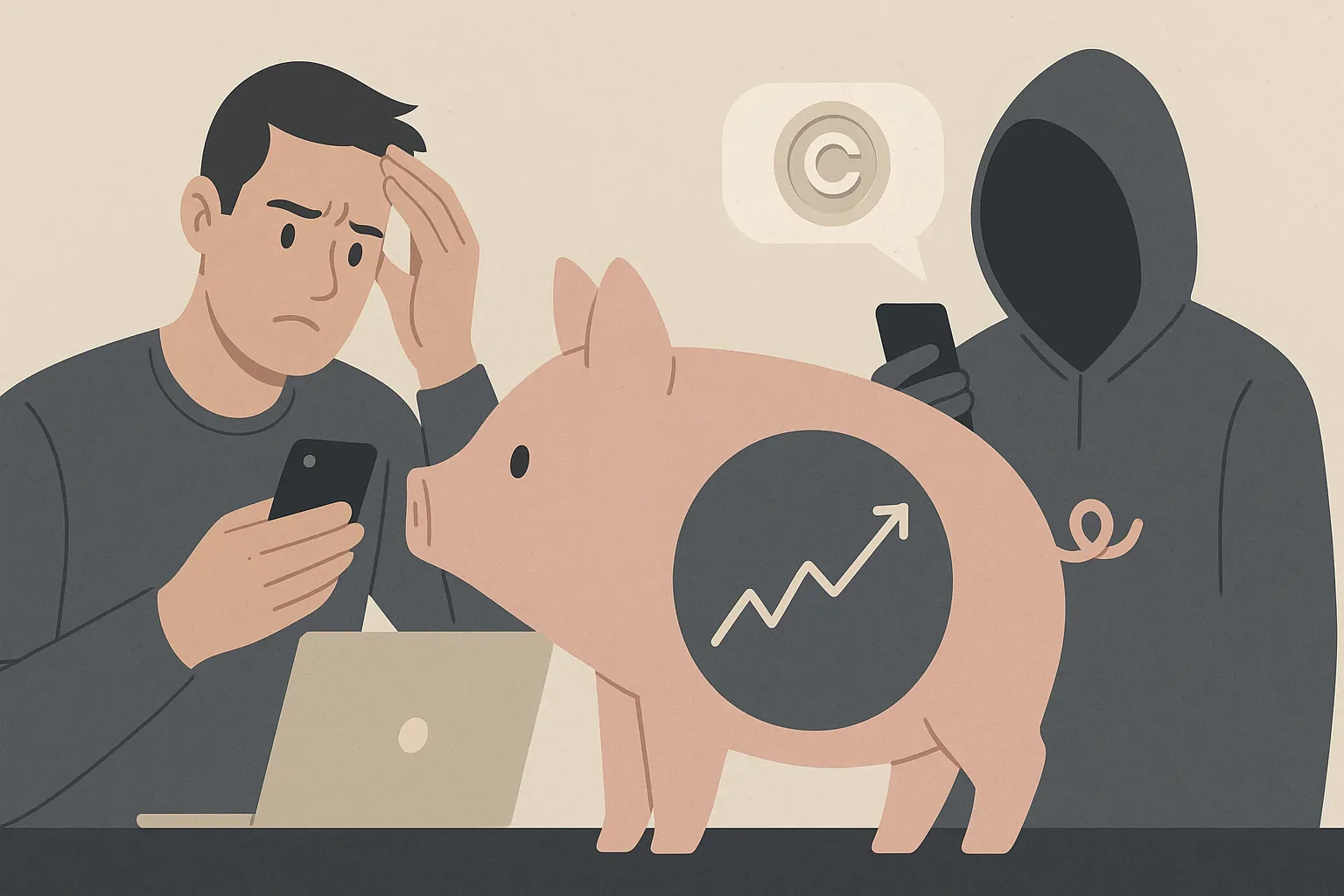
What is a Crypto Pig Butchering Scam?
A crypto pig butchering scam, known as "Sha Zhu Pan" in Chinese, is a sophisticated and long term financial fraud that involves building a deep personal relationship with a victim before convincing them to invest in a fraudulent cryptocurrency platform. The term "pig butchering" refers to the gradual fattening of a pig before slaughter; in this context, the scammer cultivates the victim, building trust and confidence over weeks or months, before leading them to a fake investment platform where their funds are eventually stolen. These scams are highly elaborate, often run by organized crime syndicates, and leverage a combination of social engineering, romance scam tactics, and convincing fake trading platforms. The initial contact often appears benign, evolving into a profound manipulation of emotion and trust, culminating in significant financial loss.
What distinguishes a pig butchering scam from other crypto frauds, and why are they so effective?
Pig butchering scams are distinct from other crypto frauds primarily due to their extended timeline and intense psychological manipulation. Unlike quick phishing attempts or pump-and-dump schemes, pig butchering involves a deep, personal relationship. Scammers invest weeks or months in cultivating friendship, romance, or professional mentorship with their targets. This prolonged engagement fosters immense trust, making victims highly susceptible to manipulation when the investment opportunity finally arises. Victims often do not realize they are being scammed until it is too late, having rationalized many red flags due to their emotional attachment and belief in the scammer's fabricated success.
Early Red Flags: Unsolicited Contact and Rapid Relationship Building
The initial phase of a pig butchering scam almost always begins with unsolicited contact. This could be a text message from an unknown number, a direct message on social media, or even an email, often claiming to be a wrong number or a casual connection. The scammer quickly tries to establish a rapport, appearing charming, empathetic, and successful. They will inquire about your life, interests, and background, showing keen interest. A major red flag is the rapid acceleration of the relationship; within days or weeks, they may express deep admiration, friendship, or even romantic interest, pushing for constant communication across various platforms. They will avoid video calls or in-person meetings, always having an excuse. This immediate intimacy, disproportionate to the actual time spent communicating, is a critical warning sign that the individual's intentions are not genuine.
What are the earliest conversational and relational red flags indicating a potential pig butchering scam?
The earliest conversational red flags typically involve vague or inconsistent details about the scammer's background, work, or daily life, coupled with an almost immediate shift towards personal inquiries about the victim. They might use stilted language or unusual phrasing, suggesting they are not native English speakers or are using translation tools. Relationally, the speed at which they seek to deepen the connection is a major indicator. They will quickly move from casual chat to discussing future plans, expressing strong affection, or positioning themselves as a mentor. They might share stories of past struggles and current financial successes, presenting an image of a self-made, empathetic individual. The conversation will invariably, and seemingly organically, steer towards their lucrative investments, often in crypto, painting a picture of easy wealth.
The Emotional Hook: Warning Signs of Psychological Manipulation
Once a relationship is established, scammers deploy powerful psychological manipulation tactics. They will mirror your interests, validate your feelings, and create an illusion of shared values and goals. This builds a strong emotional hook, making you feel understood and special. They might use love bombing, showering you with compliments and affection, making you feel like you've found an extraordinary connection. They will often share fabricated stories of personal wealth and success, attributing it to their "savvy" investments, often in crypto. They subtly introduce the idea of financial freedom and a luxurious lifestyle, suggesting they could help you achieve the same. The manipulation deepens as they gauge your financial situation and aspirations, tailoring their pitch to your vulnerabilities. They play on your desires for wealth, security, or even companionship, making the fraudulent investment opportunity seem like a natural extension of your shared dreams and their genuine desire to help you succeed.
How do scammers manipulate emotions and create a sense of urgency to push victims into investing?
Scammers manipulate emotions and create urgency through a carefully orchestrated narrative. They might share a "secret" or "exclusive" investment opportunity, emphasizing its time-sensitive nature or limited availability to prevent victims from doing due diligence. They leverage the emotional bond they've built, appealing to the victim's trust and their desire to not disappoint their newfound friend or romantic partner. They present themselves as having "inside knowledge" or a "special connection" to a platform or algorithm that guarantees high returns, positioning themselves as a benevolent guide. Fear of missing out (FOMO) is a potent tool; they show screenshots of their own (fake) profits and encourage the victim to start with a small amount to "test the waters," knowing that initial small "wins" will reinforce belief. They create a sense of obligation, making the victim feel that investing is a way to prove trust or to build a shared future.
Investment Pressure Tactics: Spotting the "Opportunity" Trap
After establishing the emotional hook, the conversation inevitably shifts to investment. The scammer will start by casually mentioning their successful crypto trading, often showing fake screenshots of their substantial profits. They will never directly ask you to invest initially; instead, they will present it as a lucrative "opportunity" they've discovered, suggesting they could guide you. They might encourage you to try with a small amount, typically $100-$1000, on their recommended (fake) platform. This initial small investment often shows immediate, albeit fake, profits, making the victim feel confident and eager to invest more. As you "earn," the pressure increases for larger investments to maximize returns, often citing specific market events or unique windows of opportunity.
Fake Platforms and Unreal Returns: Financial & Technical Warning Signs
These platforms are often sophisticated clones of legitimate exchanges or custom-built sites designed to look professional. They usually have generic-sounding names, obscure domain registrations, and no verifiable presence on established app stores or reputable review sites. Financial warning signs include promises of extraordinarily high, consistent, and guaranteed returns that are far beyond anything legitimate in the volatile crypto market. Technically, the platform might lack essential security features like multi-factor authentication beyond simple SMS, or it might have a limited range of crypto assets. The user interface may feel slightly off, with grammatical errors or poorly translated text. You might also notice that deposits are made directly to individual wallets rather than institutional ones, or that the only contact method for support is through the scammer themselves. Always verify a wallet download before you install it to avoid compromised applications.
What specific technical indicators or platform behaviors should raise a red flag about a fake crypto investment site?
Firstly, examine the website's URL: pig butchering scams often use newly registered domains that might contain typos or slight alterations of legitimate exchange names. Check the domain's registration date using a WHOIS lookup; if it's very recent, it's suspicious. The platform might lack secure socket layer (SSL) certificates, or if present, they might be from a generic provider rather than a recognized certificate authority. A critical red flag is the inability to conduct external verification of your funds; the platform's displayed balance cannot be confirmed on a public blockchain explorer. Withdrawals, if initially allowed for small amounts, might become increasingly difficult or require unusual fees. The platform's 'customer support' is often non-existent or routes directly back to the scammer. Legitimate platforms will never pressure you to use specific, obscure wallets or services to deposit funds.
The Withdrawal Trap: The Ultimate Red Flag When Funds Are Locked
The ultimate and most devastating red flag in a pig butchering scam is the inability to withdraw your funds, especially after a significant investment. Initially, the scammer might allow small withdrawals to reinforce the illusion of legitimacy and encourage larger deposits. However, once a substantial amount has been invested, withdrawal requests will be met with a series of excuses or demands. Common tactics include claiming that you need to pay a "tax," "insurance fee," "withdrawal fee," or "anti-money laundering (AML) fee" before funds can be released. These fees are often a percentage of your supposed balance, designed to extract even more money. They might also claim your account has been frozen due to suspicious activity, requiring a large "unlocking fee." Each payment leads to another, until the victim either runs out of money or finally realizes they are being scammed. At this point, all communication from the scammer and access to the fake platform ceases, leaving the victim with no recourse and total financial loss.
Action Plan: What To Do If You Spot the Warning Signs
First and foremost, cease all communication with the suspected scammer. Do not respond to their messages, calls, or emails. Block them on all platforms where you've interacted. Do not attempt to recover your funds by sending more money, as this will only lead to further losses. Document everything: save screenshots of conversations, transaction records, and the fake platform's URL. Report the scam to relevant authorities, such as the FBI's Internet Crime Complaint Center (IC3), the Federal Trade Commission (FTC), or your local law enforcement. Inform your bank and any financial institutions if you used traditional methods to send money, and alert cryptocurrency exchanges if you sent crypto. Change all passwords associated with your financial accounts and email addresses that might have been compromised.
What steps should I immediately take if I suspect I'm being targeted by a pig butchering scam or have already invested?
If you suspect you are being targeted or have already invested, act swiftly. First, cut all contact with the individual and block them across all communication channels. Do not engage further or try to reason with them; their goal is to extract more money. If you have sent any money, particularly cryptocurrency, assume it is lost. Do not send any more funds for "taxes," "fees," or "unlocking" your account. If you provided any personal identifying information, monitor your credit reports and financial accounts for suspicious activity. Report the scam to law enforcement and relevant government agencies immediately. The more details you can provide – communication logs, transaction IDs, platform URLs – the better. If funds were transferred from a bank, contact your bank's fraud department. If you used a crypto exchange, notify them of the fraudulent transaction. Consider seeking support from a victim support group or mental health professional, as these scams are deeply traumatic. Understand that you are a victim of a sophisticated crime, and it is not your fault.
Protecting Your Assets: Proactive Measures Against Sophisticated Scams
Proactive measures are your best defense against sophisticated scams like pig butchering. Always be skeptical of unsolicited contact from strangers, especially those who quickly push for a deep personal connection or discuss lucrative investment opportunities. Never invest in anything suggested by someone you only know online, regardless of how trustworthy they seem. Verify the legitimacy of any investment platform independently; check official registers, reputable financial news, and avoid platforms with generic names or promises of guaranteed, high returns. Use strong, unique passwords for all your online accounts and enable two-factor authentication wherever possible. Be extremely cautious with personal information shared online. Educate yourself on common crypto scam tactics and understand that genuine investment opportunities rarely come through random social media messages or dating apps. Learn how to choose a crypto wallet carefully and how to secure a crypto wallet to protect your digital assets. Remember, if an investment opportunity sounds too good to be true, it almost certainly is.
Topics in this article
- crypto-scams
- pig-butchering
- financial-fraud
- romance-scam
- investment-scam
- crypto-security
- scam-prevention
- digital-assets
GlobalCryptoWallets.com publishes news, reviews, and educational information only. Nothing on this website is financial, investment, trading, legal, or tax advice. Cryptocurrency involves substantial risk, and readers should conduct independent research and consult a qualified professional before making decisions.