GuidesEvergreen guide
Receive Crypto Into Your Wallet
Receive Crypto Into Your Wallet: a practical, no-hype guide for readers from GlobalCryptoWallets.com.
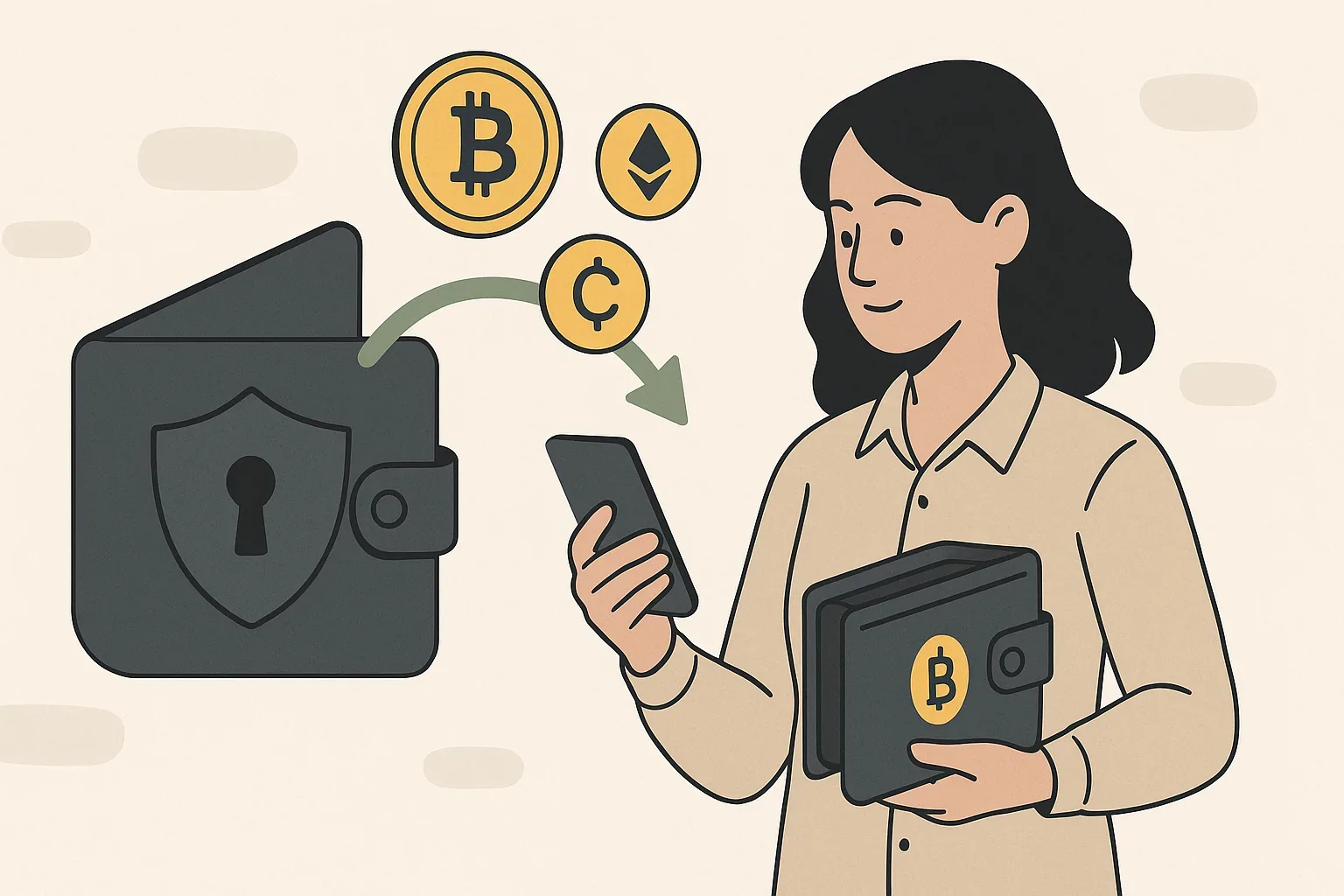
Our aim is to demystify the process, offering clear, actionable advice for general readers from GlobalCryptoWallets.com.
Getting Started: What 'Receiving Crypto' Actually Means
At its core, receiving crypto is the act of a sender transferring digital assets from their wallet to an address associated with your wallet. Unlike traditional banking, where you might receive funds into an account identified by an account number and a bank identifier, cryptocurrency operates on a decentralized network known as a blockchain. When you 'receive crypto,' you are essentially receiving a record on a public ledger (the blockchain) that a certain amount of cryptocurrency is now associated with a unique cryptographic address that only you control (via your wallet's private keys).
The crypto itself never leaves the blockchain; ownership is simply transferred to your wallet address. Your wallet is merely a tool that holds the private keys necessary to prove ownership of the funds associated with that address and to authorize their future movement.
Your Wallet Address: The Key to Receiving Funds
Your cryptocurrency wallet address is a unique string of alphanumeric characters that serves as the destination for incoming transactions. It's akin to your email address or a bank account number, but for digital assets on a blockchain.
How do I find my specific cryptocurrency wallet address?
For Software Wallets (Mobile/Desktop): Open your wallet application. Look for a button or tab labeled 'Receive,' 'Deposit,' or a similar term. Select the specific cryptocurrency you wish to receive (e.g., Bitcoin, Ethereum, Solana). The app will then display your unique receiving address, often accompanied by a QR code.
For Hardware Wallets (Cold Storage): Connect your hardware wallet to your computer or mobile device and unlock it with your PIN. Open the companion application provided by the hardware wallet manufacturer (e.g., Ledger Live for Ledger devices, Trezor Suite for Trezor devices). Navigate to the 'Receive' or 'Accounts' section. Select the specific cryptocurrency account you want to use. The application will generate and display your receiving address.
For Exchange Wallets: Log in to your cryptocurrency exchange account. Find the 'Deposit' or 'Receive' section. Choose the specific cryptocurrency you intend to receive.
step by step Guide: How to Receive Crypto Securely
What are the step by step instructions for securely receiving crypto into any wallet?
- Open Your Wallet and Select the Cryptocurrency: Launch your chosen crypto wallet application or log into your exchange account. Navigate to the 'Receive' or 'Deposit' section. For example, if someone is sending you Ethereum (ETH), make sure you select ETH within your wallet's receive function.
- Locate Your Receiving Address: Once you've selected the correct crypto, your wallet will display your unique receiving address.
- Copy the Address: Use the 'Copy' button provided by your wallet application to copy the entire address to your clipboard.
- Share the Address with the Sender: Send the copied address to the person or entity sending you the cryptocurrency. Use secure communication channels, such as encrypted messaging apps, direct email, or in-person sharing. Never share your private keys or seed phrase; only the public receiving address is needed.
5.
- Wait for the Transaction to Be Processed: Once the sender initiates the transaction, it will be broadcast to the cryptocurrency's network. The transaction will then await confirmation by network participants (miners or validators).
7.
Network Matters: Why Different Cryptocurrencies Have Different Rules
Cryptocurrencies operate on different blockchains, each with its own set of rules, protocols, and addresses. These are distinct networks.
Imagine sending a letter. You wouldn't send a letter intended for the postal service through a parcel delivery service, even if both ultimately deliver physical items. Similarly, you cannot send a cryptocurrency token designed for the Ethereum network (an ERC-20 token) to an address on the Bitcoin network, or vice versa. The networks are incompatible, and any funds sent to the wrong network will not be recognized and will be permanently lost.
Common network distinctions include:
Bitcoin Network (BTC): Used exclusively for Bitcoin transactions. Ethereum Network (ERC-20): Used for Ethereum (ETH) and thousands of ERC-20 standard tokens built on the Ethereum blockchain. Binance Smart Chain (BSC/BEP-20): Used for BNB and BEP-20 standard tokens on Binance Smart Chain. Solana Network: Used for SOL and SPL tokens on the Solana blockchain.
When you select a cryptocurrency in your wallet's receive section, pay close attention if it offers multiple network options for that specific asset (e.g., USDT-ERC20, USDT-BEP20, USDT-TRC20). If the sender is sending USDT on the Tron network, you must generate a TRC-20 USDT address in your wallet. Mismatching these will lead to lost funds.
Choosing the Right Wallet for Receiving: A Quick Overview
Selecting the appropriate wallet for receiving your cryptocurrency depends on your security needs, frequency of transactions, and the amount of crypto you're holding.
Hot Wallets: These are connected to the internet. They include exchange wallets, mobile wallets (e.g., Trust Wallet, MetaMask), and desktop wallets. Hot wallets offer convenience for frequent transactions and smaller amounts, as access is immediate. However, their internet connectivity makes them more susceptible to online threats like hacking and phishing.
Cold Wallets: These are not connected to the internet. Hardware wallets (e.g., Ledger, Trezor) are the most popular form of cold storage. They store your private keys offline, significantly enhancing security against online attacks. Paper wallets, though less common now, also represent cold storage. Cold wallets are ideal for storing larger amounts of crypto for the long term. If you plan to transfer significant amounts, particularly to a hardware wallet, our guide at https://globalcryptowallets.com/guides/transfer-crypto-to-a-hardware-wallet offers detailed steps.
For general receiving, a hot wallet may suffice for smaller, transactional amounts. For significant holdings or long term storage, receiving directly into a cold wallet is often the most secure approach, provided you follow the proper setup and verification procedures.
Confirming Your Transaction: What Happens After You Receive Crypto
How can I verify that my crypto transaction has been successfully received? After a sender initiates a transaction, it doesn't instantly appear in your wallet. It first needs to be processed and confirmed by the blockchain network. This process ensures the integrity and immutability of the transaction record.
- Transaction ID (TXID): When a sender sends crypto, they should provide you with a transaction ID, also known as a transaction hash. This is a unique identifier for that specific transaction on the blockchain.
- Using a Block Explorer: You can use the TXID to track the transaction's progress on a public block explorer specific to that cryptocurrency's network (e.g., blockchain.com for Bitcoin, Etherscan for Ethereum, BscScan for Binance Smart Chain). Simply paste the TXID into the search bar of the relevant block explorer. The explorer will show you details like the sender's address, your receiving address, the amount sent, the transaction fee, and most importantly, the number of network confirmations.
- Network Confirmations: A 'confirmation' means that a block containing your transaction has been added to the blockchain and subsequently validated by other network participants. More confirmations generally mean a higher degree of security and finality for the transaction. For smaller transactions, a few confirmations might be sufficient. For larger amounts, exchanges and wallets often require a higher number of confirmations (e.g., 6 for Bitcoin, 12 or more for Ethereum) before they consider the funds spendable or fully credited to your account. Your wallet will typically update its balance once it deems the transaction sufficiently confirmed.
Common Mistakes and How to Avoid Them When Receiving Crypto
What are the most common errors to avoid when someone is sending crypto to me? While the process of receiving crypto is designed to be secure, human error often introduces vulnerabilities. Being aware of these common mistakes can help you protect your funds.
- Incorrect Wallet Address: This is the most frequent and most devastating error. Sending crypto to a wrong or mistyped address is irreversible. The funds will be sent to an address you don't control, and there is no way to retrieve them.
- Always ensure the sender selects the exact same network as the one your receiving address is generated for. For specific guidance on sending crypto securely, refer to our guide at https://globalcryptowallets.com/guides/how-to-send-crypto-securely.
- Forgetting Memo/Destination Tags: Some cryptocurrencies, particularly when depositing to an exchange wallet, require a 'memo,' 'destination tag,' or 'payment ID' in addition to the wallet address. This tag helps the exchange credit the funds to your specific account within their omnibus wallet. If you forget to include or provide an incorrect tag, your funds may be lost or significantly delayed, requiring a lengthy support process to recover.
- Clipboard Hijacking Malware: Malicious software can monitor your clipboard for cryptocurrency addresses and automatically replace them with an attacker's address when you paste. This is why verifying the address character by character, especially before large transfers, is critical.
- Legitimate platforms will never ask you to send funds to receive funds. Never share your private keys or seed phrase with anyone, ever. Your seed phrase is the master key to your funds.
- Sending Unsupported Cryptocurrencies: Ensure your wallet explicitly supports the cryptocurrency you intend to receive. Some wallets are designed for a specific set of assets (e.g., Bitcoin-only wallets), and sending an unsupported asset to such a wallet may result in loss.
Ensuring Security: Best Practices for Receiving Funds
These best practices will help safeguard your assets when receiving funds.
- Always Double-Check Addresses: This cannot be overstated. Copy and paste your address, then visually inspect the first few and last few characters, and if possible, compare them with the sender. For large transactions, consider sending a small test amount first to confirm the process works correctly before sending the full amount.
- Confirm the Network: Always explicitly confirm with the sender which network they are using to send the funds, and ensure your receiving address is generated for that exact network. If your wallet provides multiple network options for a single asset, select the correct one.
- Use Trusted Wallets and Exchanges: Only use reputable wallet applications and well-established exchanges. Download wallets from official websites or verified app stores. Avoid clicking on suspicious links or downloading software from unverified sources.
- Never store it digitally (e.g., in email, cloud, screenshots), and never share it with anyone. Store it securely offline, ideally in multiple physical, secure locations.
- Verify Addresses on Hardware Wallets: If using a hardware wallet, always confirm the receiving address directly on the hardware device's screen. This protects against software-based attacks that might alter the address displayed on your computer screen.
- Be Skeptical of Unsolicited Requests: Treat any unexpected or suspicious requests for your wallet address, especially if they come with urgent demands or promises of high returns, as potential scams. A legitimate sender only needs your public receiving address.
- Educate Yourself Continuously: The crypto landscape evolves rapidly. Stay informed about common scams, security vulnerabilities, and best practices. Understanding how to choose a crypto wallet and how to secure a crypto wallet are foundational steps in this ongoing education.
By diligently following these steps and maintaining a security-first mindset, you can confidently and securely receive cryptocurrency into your wallet, minimizing risks and ensuring your digital assets reach their intended destination without incident.
Topics in this article
- crypto-receiving
- wallet-management
- blockchain-basics
- security-practices
- transaction-guide
GlobalCryptoWallets.com publishes news, reviews, and educational information only. Nothing on this website is financial, investment, trading, legal, or tax advice. Cryptocurrency involves substantial risk, and readers should conduct independent research and consult a qualified professional before making decisions.